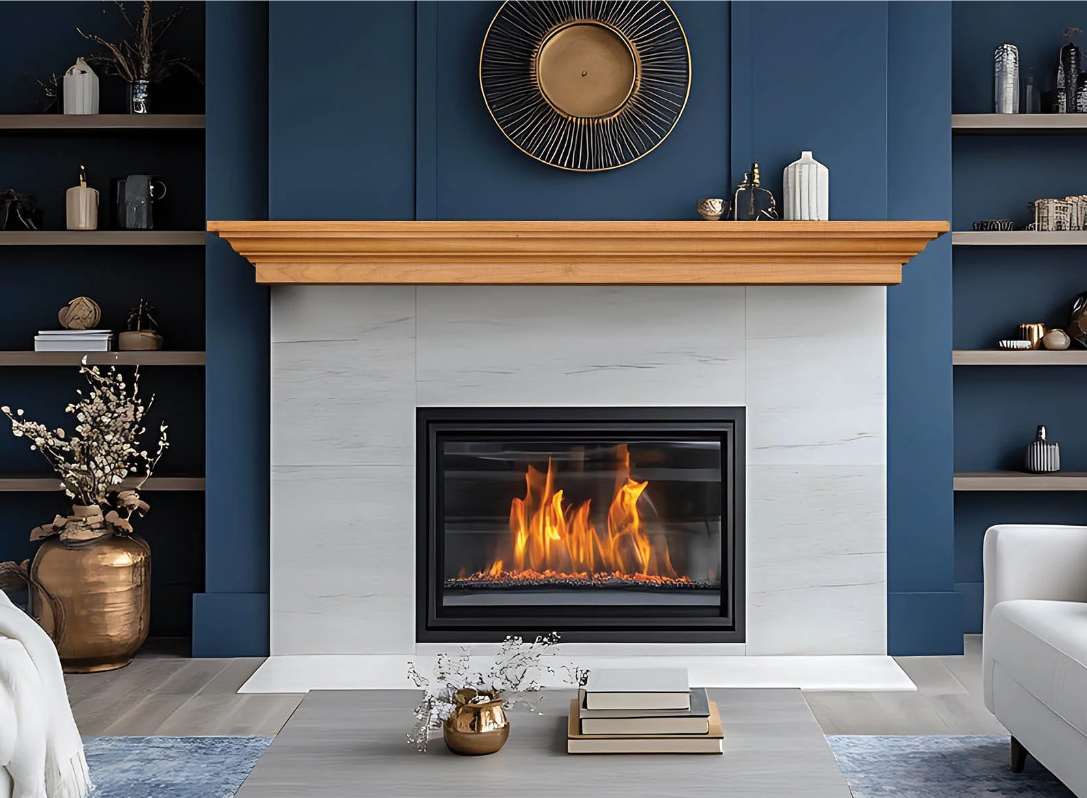
Cosmo gas fireplace insert burning in a Central Kentucky living room

Hearth service · Lexington, Kentucky

Gas fireplace maintenance:
what you can do, what we must

Three things keep a gas fireplace safe. The cleaning you handle yourself, the annual service a certified technician handles, and knowing exactly where the line between them sits. This guide draws that line.

Serving Central Kentucky since 2004 NFI certified technicians Free estimates Same week service calls

Start here

What gas fireplace maintenance actually means

Gas fireplace maintenance breaks into three parts: cleaning you can do yourself, annual professional service you cannot skip, and knowing when to stop and call immediately.

The homeowner tasks are safe. Turn off the pilot light when the fireplace sits idle for the season, clean the glass when soot builds up, vacuum the vents and louvers, wipe down the exterior, and look for visible damage.

The professional tasks are not safe to attempt. A certified technician inspects for gas leaks, cleans the burner and logs, tests the pilot light and oxygen sensor, checks the firebox for corrosion, replaces worn parts, and verifies the vent system is carrying carbon monoxide out of your home.

Annual professional service is not optional. Manufacturers require it, and the reason is safety. A gas leak you cannot smell, a clogged vent that lets carbon monoxide back into the room, or a failing oxygen sensor that does not cut the gas when it should are all problems a visual check will never catch. Efficiency matters too, since a dirty burner wastes fuel and a poorly venting fireplace delivers less heat. But the stakes here are higher than a utility bill.

Close view of a walnut mantel above a clean burning gas fireplace

A gas fireplace that has been serviced looks like this on the first cold night: steady blue rooted flames, clear glass, no odor.

Three reasons

Why gas fireplaces need maintenance

Safety, efficiency, and longevity. Each one shows up on a different timeline, and the first one is the reason we do not let a season slide.

01

Safety

Annual service catches gas leaks and faulty components before they become dangerous. A pilot light that will not stay lit, a clogged vent system, or a failing oxygen sensor can create a carbon monoxide hazard. Vents fill with debris, grease, and bird nests over time, and that only turns up on an inspection.

02

Efficiency

Well maintained gas logs burn cleaner and put out more heat on less fuel. A dirty burner or a louver packed with dust forces the unit to consume more gas for less warmth. Cleaning restores the system to the output the manufacturer designed it for.

03

Longevity

Yearly servicing finds cracks, rust, loose hardware, and corroded gas connections while they are still small and cheap. One annual visit costs considerably less than replacing a fireplace that failed early because nobody was looking.

The safety line

What you can do, and what requires certification

The rule is simple. You can clean what you can see and reach without tools, and you can switch the pilot light off and on using the manufacturer's instructions. Everything past that point involves gas.

Safe for homeowners
  • Turn off the pilot light when the fireplace sits idle for a stretch. The pilot burns gas continuously even with the fireplace off, so switching it off through the warm months stops fuel you are not using.
  • Clean the glass with a soft cloth and a cleaner made for fireplace glass. Household glass cleaner can etch the surface or leave residue that bakes on. Wipe in circles and skip abrasive pads, which scratch and make future cleaning harder.
  • Vacuum vents and louvers every few weeks with a soft brush attachment. Blocked airflow drops efficiency and keeps the room from heating. Check the exterior vent opening for obstructions too.
  • Wipe down and inspect the exterior. Look for cracked glass, a cracked firebox, rust on metal, or loose hardware. Confirm gas connections look tight, but never adjust, loosen, or disconnect a gas component yourself. Note what you find and call.

These four are safe because none of them puts your hands on the gas system, the burner, the pilot assembly, or any ignition component.

Certified technician only
  • Leak detection and gas connections. Testing for leaks with detection equipment, tightening every connection, and bleeding the gas line if air has entered the system.
  • Burner, logs, pilot assembly, and ODS. Cleaning the components that sit inside the combustion path, including the oxygen depletion sensor, which is a calibrated safety device rather than a part you wipe down.
  • Flame and pressure adjustment. Setting burner flame height and color correctly, which requires instruments that measure gas pressure rather than a judgment call by eye.
  • Corrosion inspection and parts replacement. Examining the firebox and components for rust and wear, then swapping worn parts before they fail mid winter.
  • Full operational test. Running the unit under load, monitoring for carbon monoxide, and confirming the safety sensors actually respond the way they are supposed to.

Attempting these creates a safety hazard and, in most cases, voids your manufacturer warranty. Housewarmings NFI certified technicians carry the training and the instruments for all of it.

Housewarmings technician reviewing a gas fireplace system during annual service

What an annual visit covers

The part homeowners cannot perform

You can clean glass and vacuum vents. You cannot safely inspect a thermocouple, test a gas valve, or verify that the oxygen depletion sensor will shut off gas flow when oxygen drops. That is the whole distinction.

An annual gas fireplace service call from Housewarmings covers leak testing, burner and log cleaning, pilot and ODS service, corrosion inspection, flame adjustment, connection tightening, line bleeding, and a full run under operating conditions.

If your gas fireplace has not been serviced in the past twelve months, book it now rather than in December. Waiting until the system fails means waiting for heat on the night you need it most.

Schedule my annual service

Why the fall visit matters

Venting and carbon monoxide

The system that carries the danger out

Your ventilation system exists to move carbon monoxide and combustion gases outside your home. Without it working properly, those gases stay indoors. Carbon monoxide is colorless, odorless, and lethal in concentration. The vent removes what the flame produces, which is exactly why a blockage turns a safe appliance into a hazard.

Vents clog gradually. Debris, grease, bird nests, and dust restrict airflow, and the first symptoms are subtle: weaker flames, a faint smell when the unit runs, condensation on the glass. By the time you notice any of those, the vent is already partly blocked. Clean the vent system every year, and sooner if you see poor airflow or catch an odor.

Direct vent systems pull combustion air in through an outer pipe and push exhaust out through an inner pipe, terminating at a wall or roof cap. They are sealed off from room air. Service should check the exterior termination for obstructions, inspect the wall seals, and confirm both pipes are clear.

Vent free systems have no outside vent. They rely on an oxygen depletion sensor that cuts gas flow if oxygen in the room drops too low. Service focuses on keeping that sensor clean and confirming it still trips when it should.

Both configurations show up across the product lines we carry, from built in gas fireplaces and retrofit fireplace inserts to freestanding gas stoves. If you are unsure which type you own, send a photo with your service request and we will identify it before the visit.

Never attempt vent work that involves disassembling components, climbing to a roof cap, or checking internal sensors. Knowing what a healthy vent looks like is the job.
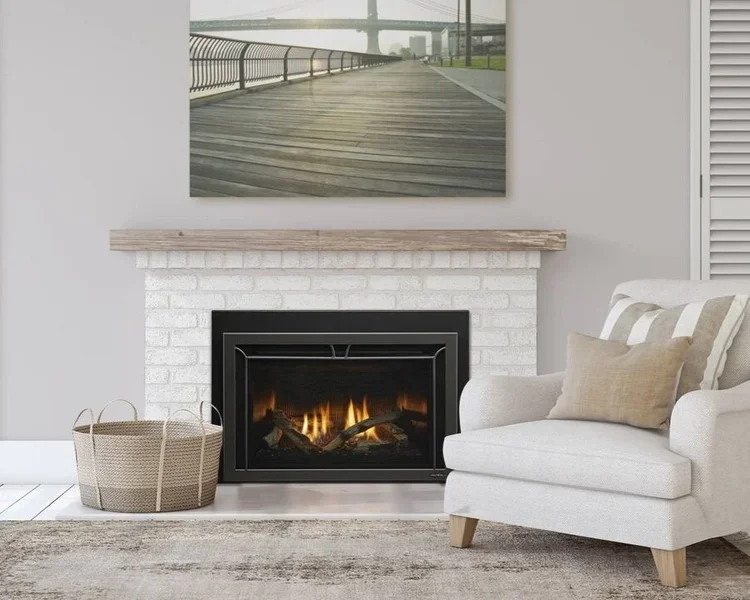
Diagram showing a wood mantel installed too close to a fireplace opening

Clearance and venting problems are the two issues our technicians flag most often on first visits to homes that changed hands recently.

Every visit, every time

Our technicians put a CO monitor on the unit during every vent inspection. A visual check tells you a pipe looks clear. A monitor tells you what is actually coming back into the room.

Symptom checker

Is this urgent, or can it wait for annual service?

Pick everything your fireplace is doing. We will tell you how urgent it is, then you can call us or copy the list to send over, so a technician arrives already knowing what to look for.

Select what you are seeing

No symptoms selected

Pick one or more above

Nothing selected yet. If your fireplace is behaving normally and you are here for the annual visit, choose the last option below.

Pilot light that will not stay lit

Usually a dirty thermocouple, a faulty gas valve, or a failing pilot assembly. The thermocouple shuts off gas when it stops sensing a flame, and a coating of soot or mineral buildup is enough to make it cut out. It wipes clean in seconds, but reaching it means disconnecting gas lines and leak testing afterward.

Flames too high or too low

A gas pressure problem or a clogged burner. Pressure is measured, adjusted, and verified with instruments. It is not something to eyeball, and it is not a homeowner repair under any circumstances.

Strange odors

Dust burning off during the first few fires of the season is normal. Anything else is not. A sulfur or rotten egg smell is the mercaptan additive gas suppliers use to make leaks detectable. Shut the gas off, leave, and call.

Booked solid by October, every year.

Central Kentucky homeowners schedule service the week the first cold front hits. Get ahead of it.

Reserve a service date

The calendar

Your annual gas fireplace maintenance schedule

Attention at three intervals: monthly checks that take minutes, seasonal preparation at the start and end of use, and annual professional service.

FrequencyTasksWho does it
Monthly
while in use
Look over the flames and pilot light. Clean the glass if soot or film appears. Confirm vents and louvers are clear of dust. Homeowner
Seasonally Before winter: book annual professional service, test the system, replace remote batteries. After winter: turn off the pilot light, clean glass and exterior one final time, vacuum the vents. Homeowner
Annually Full inspection of gas lines, burner, pilot assembly, and ODS. Cleaning of logs, burner, and internal components. Leak testing, corrosion check, and a system test under operating conditions. NFI certified technician

A pilot light that struggles in October is a cheap fix. The same pilot light in January is a cold house and a wait for parts.

Two moments a year

Seasonal preparation for your gas fireplace

Fall

Before you need it

Book professional service early so the annual inspection lands before the heating season rather than in the middle of it. A few weeks before regular use, run the unit yourself: turn it on, watch the flames, and confirm the pilot holds and the heat is steady.

Check the remote batteries and replace them if response has been slow. If anything reads wrong during that test run, whether weak flames, an odor, or a flickering pilot, call for service before the first cold night rather than after it.

Spring

When you are done for the year

Turn off the pilot light once the season ends. It burns gas continuously even with the fireplace off, and leaving it lit through summer is fuel spent on nothing.

Clean the glass one last time and vacuum the vents and louvers to clear the winter's dust. That keeps debris from hardening over summer and makes fall startup easier. If you spot damage to the glass, logs, or exterior while you clean, have it addressed before next season. Small cracks widen when they are left alone.

Answers

Frequently asked questions

Annual professional service is the standard. A certified technician should inspect your gas fireplace once a year to check for wear, clean internal components, test for gas leaks, and confirm the system runs safely. More frequent service may be needed if you notice strange odors, irregular flames, or a pilot light that will not stay lit.

You can safely handle some of it: cleaning the glass with a cleaner made for fireplace glass, vacuuming dust from the vents and louvers, wiping down the exterior, and turning off the pilot light when the fireplace is not in use. What you cannot safely touch is any gas component, including pilot assemblies, burners, gas lines, valves, and internal connections. Those require a certified technician.

Cost varies by system type, the condition of the unit, and what parts or repairs the inspection turns up. A straightforward annual cleaning on a well maintained system costs less than a visit that uncovers a faulty thermocouple or a clogged burner needing replacement. In Central Kentucky, most of the systems we service are brands we sell and install, including Napoleon, Heat and Glo, Regency, and Valor, so we stock the common replacement parts and our technicians know those systems well. That keeps diagnostic time short and parts cost predictable. Housewarmings provides free estimates, so you know the cost before committing to the work.

A pilot light that will not stay lit is usually a dirty thermocouple, a faulty gas valve, or a bad pilot assembly. The thermocouple is a safety device that shuts off gas flow when it stops detecting a flame, so once it is coated in soot or corrosion it stops sensing the pilot and cuts the gas. On most service calls for this issue, our technicians find a thermocouple coated in white or tan mineral buildup from combustion byproducts. It wipes clean in seconds, but homeowners cannot safely reach it, because accessing the pilot assembly means disconnecting gas lines and removing logs or panels, then testing for leaks afterward.

Poor venting shows up as strange odors, which signal that combustion gases are not fully exiting, along with visible soot around the fireplace or on the glass, weak or irregular flames, or a stuffy room while the fireplace runs. Vents clog with debris, grease, or bird nests over time and block airflow. If you notice any of these, turn off the fireplace and call for service immediately.

Both types require annual professional service. Direct vent systems pull combustion air from outside and exhaust back outside through a sealed vent pipe, so maintenance includes cleaning and inspecting the exterior vent termination for blockages or damage. Vent free systems burn room air and rely on an oxygen depletion sensor to shut off the gas if oxygen levels drop too low, so maintenance focuses on keeping that sensor clean and testing its function. Both need their burners, pilot assemblies, and gas connections inspected and cleaned annually.

The tasks are different, but both need annual professional service. Wood fireplaces require chimney sweeping to remove creosote, ash cleanup after every fire, and inspection for structural damage from heat and moisture. Gas fireplaces skip the ash and creosote but still need their burners cleaned, gas components inspected, vents cleared, and safety devices tested. Neither one is a set and forget appliance. Each earns its reliability through regular care.

Housewarmings

Gas fireplace service in Lexington, KY

Housewarmings has served Central Kentucky since 2004. Our team handles gas fireplace service across Lexington, Nicholasville, Georgetown, Richmond, Versailles, and the surrounding communities.

We are authorized service partners for Napoleon and Valor, the brands in most Lexington homes we have worked in, plus Empire, White Mountain, Monessen, and Vermont Castings systems. We provide safety training and maintenance on every brand we sell.

  • Lexington
  • Nicholasville
  • Georgetown
  • Richmond
  • Versailles
  • Surrounding areas

Visit the showroom at 2320 Palumbo Drive in Lexington to talk through your system in person. We also handle grill service for the outdoor cooking equipment we sell, so a spring visit can cover both. Whatever you do, never adjust gas components yourself. Always use certified professionals. That is what keeps you safe.

Related at Housewarmings

The technicians on your call

Jordan BrewerNFI certified, gas systems
Ryan MitchellNFI certified, gas and solid fuel hearth systems
Same week service

Maintenance and emergency repairs

If you are seeing a pilot light that will not hold, flames that look wrong, or any odor at all, call rather than wait for the next opening. We keep room in the schedule for exactly this.

Since 2004

Two decades of Central Kentucky hearths

We sell, install, and service the same systems. When a part fails, it is usually already on the truck.

Book your service

Get your gas fireplace on the schedule

One call puts a certified technician on your calendar. Tell us what the fireplace is doing, or just say it is due, and we will match you with the right tech and the right time slot.

Free estimates You know the cost before any work begins.
NFI certified only Jordan and Ryan run every gas service call themselves.
Same week openings Maintenance visits and emergency repairs both.

Two ways to reach us

Talk to a technician today

Calling is fastest, especially if the fireplace is doing something it should not. If it is simply time for the annual visit, send us a message and we will come back to you the same business day.

Call now (859) 231-0005 Contact us online
  • Showroom 2320 Palumbo Drive, Lexington, KY
  • Service area Lexington, Nicholasville, Georgetown, Richmond, Versailles and surrounding areas
  • Emergencies Sulfur smell, a pilot that will not hold, or any doubt about safety: shut the gas off and call rather than message.